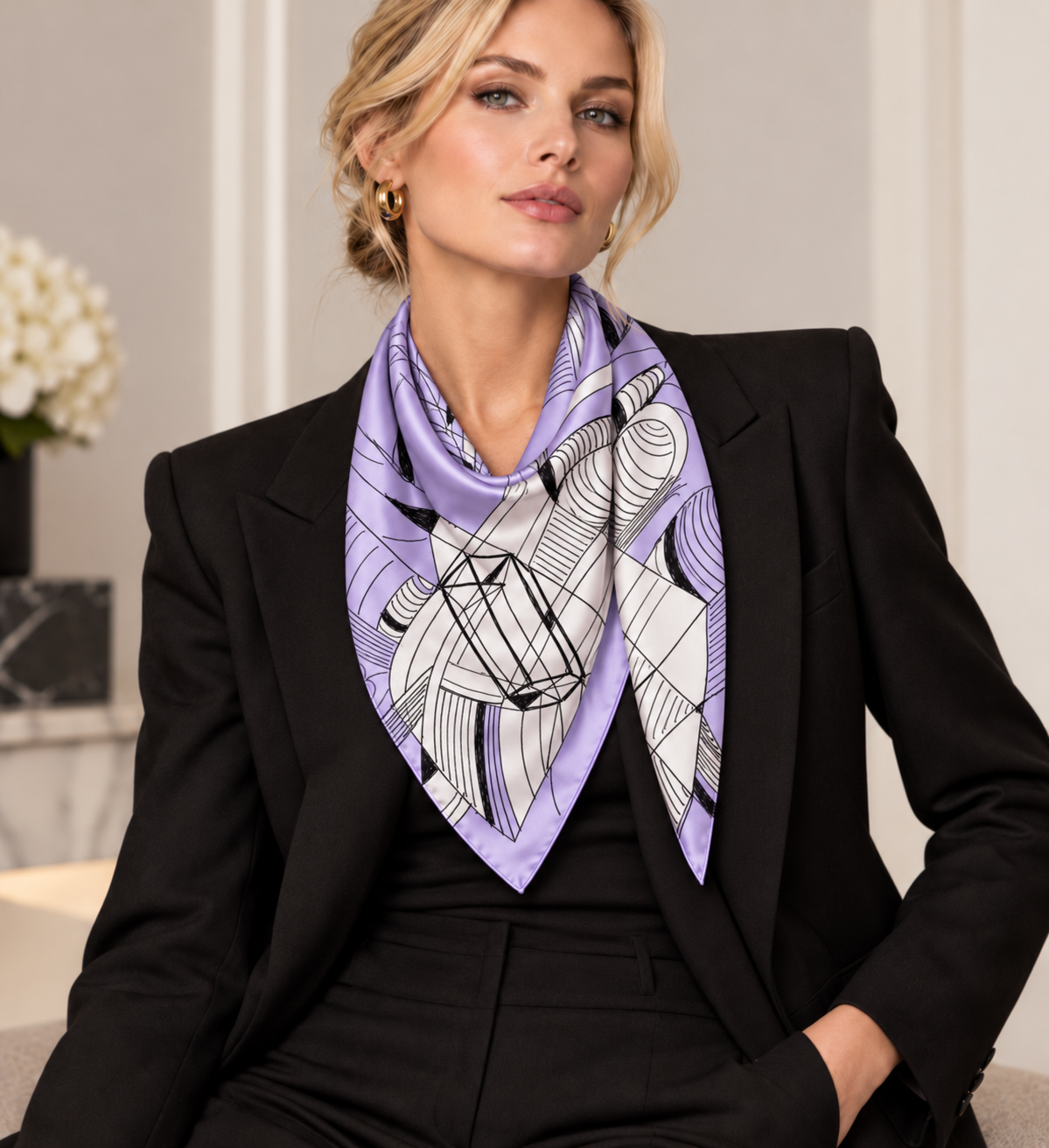
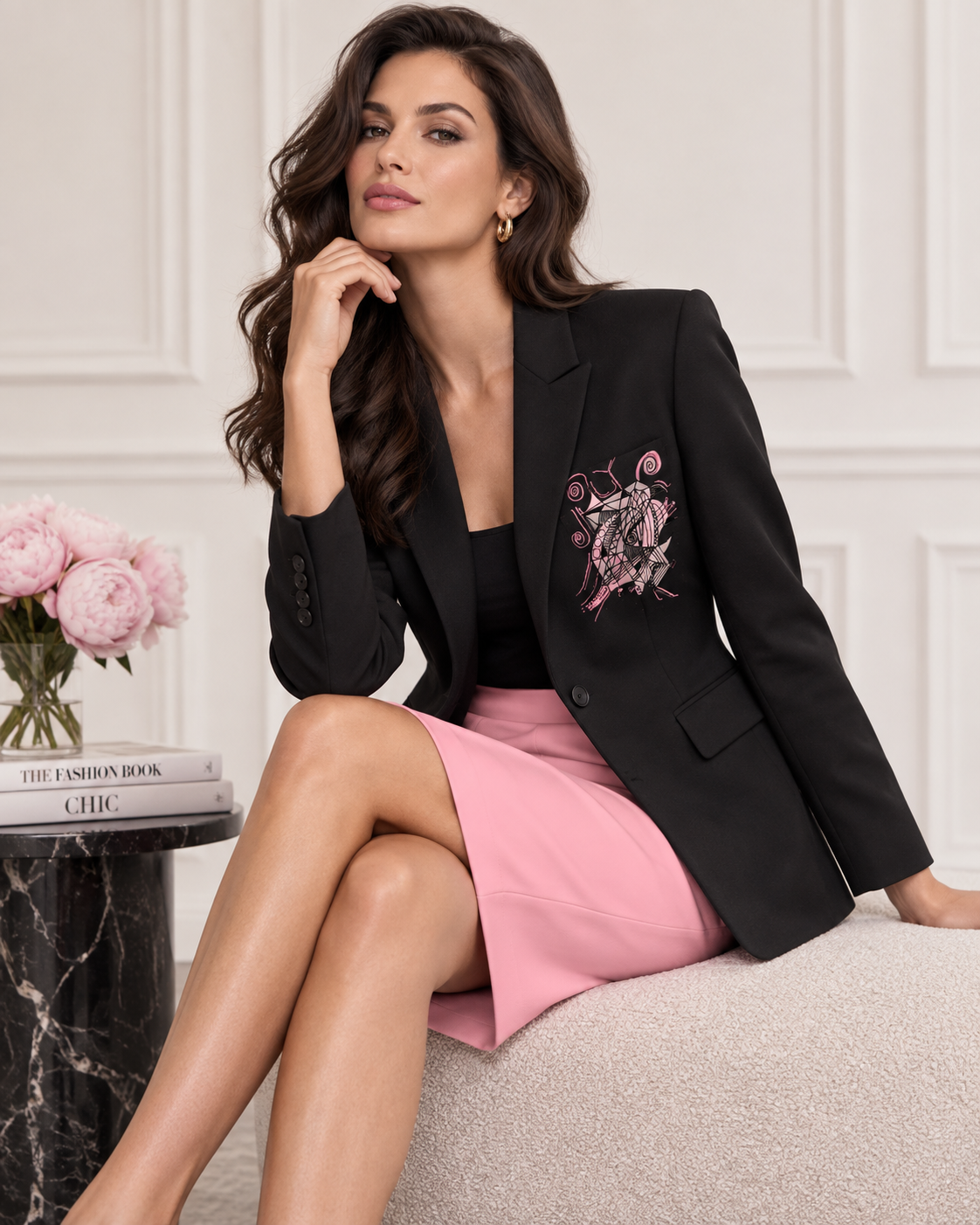
A scarf collection dedicated to the Count Oceanus fashion project, in which the subjects and variants of NP Cerebrals become images to wear. Some black-and-white drawings could also find a place on garments in the women’s and men’s collections through carefully placed graphic interventions: visual accents, or “points of light”, that give a detail character and make it recognisable.
NP Cerebrals scarf proposal for Count Oceanus.Jacket proposal with an NP Cerebrals motif for Count Oceanus.
Home textiles
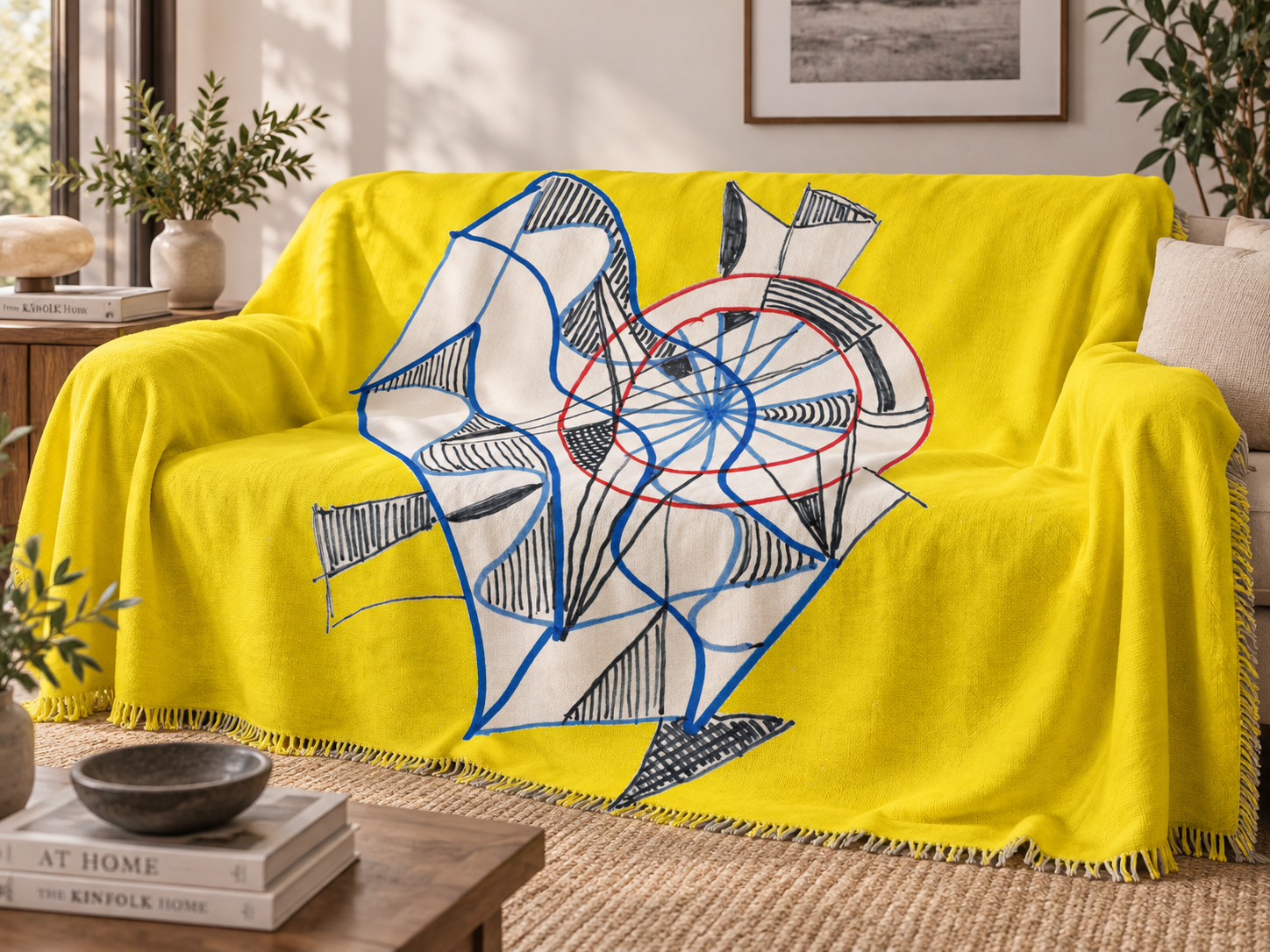
Large, lightweight cotton throws, conceived as sofa covers, could bring drawing to a broad surface used every day. Curtains remain a possible development to explore, considering the relationship between mark, transparency and light.
NP Cerebrals sofa-cover proposal.
Decorative plates
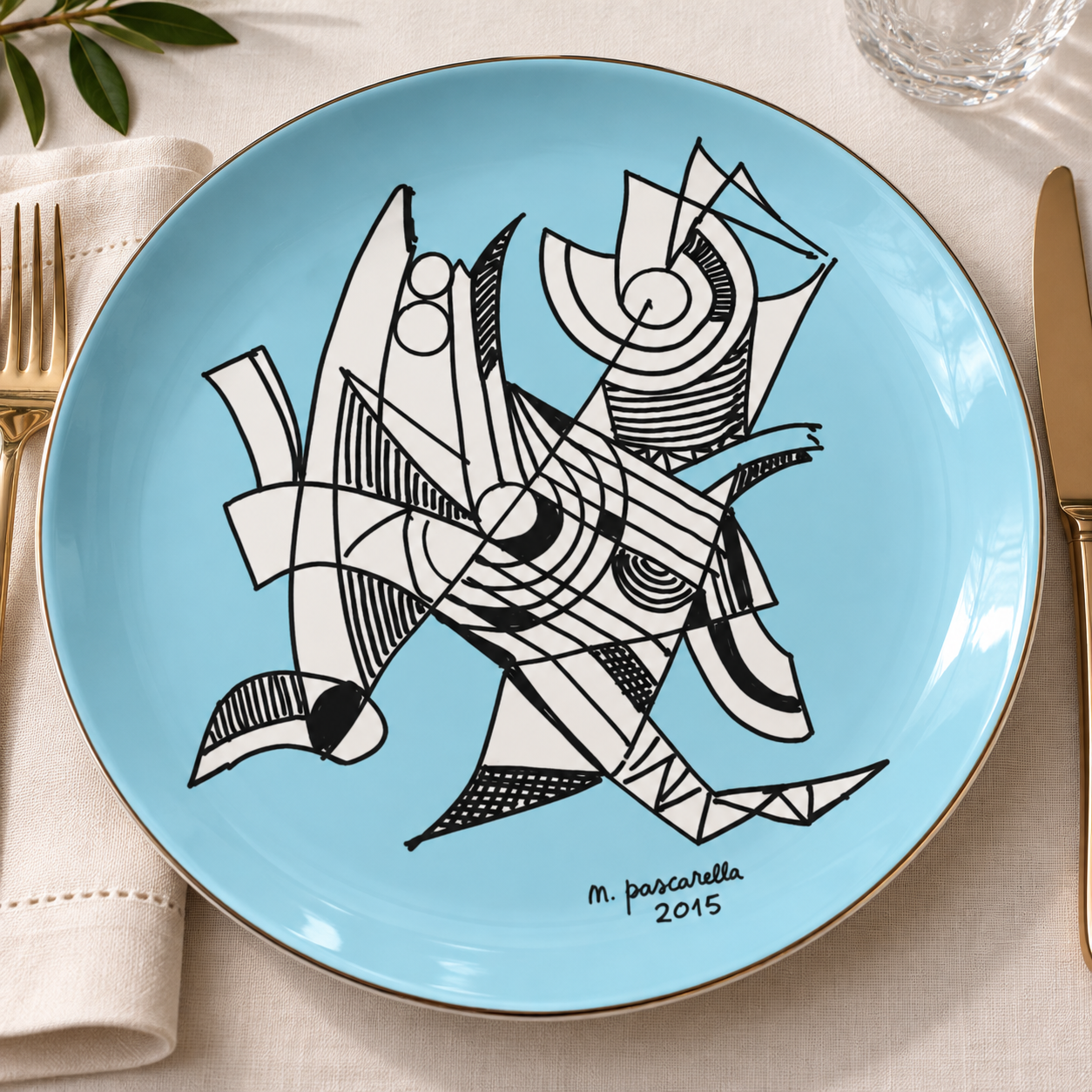
The circular format offers another space for composing NP Cerebrals: decorative plates to display individually or in small groups, creating combinations of subjects and colours.
NP Cerebrals decorative-plate proposal.
Ceramics for bathrooms and kitchens
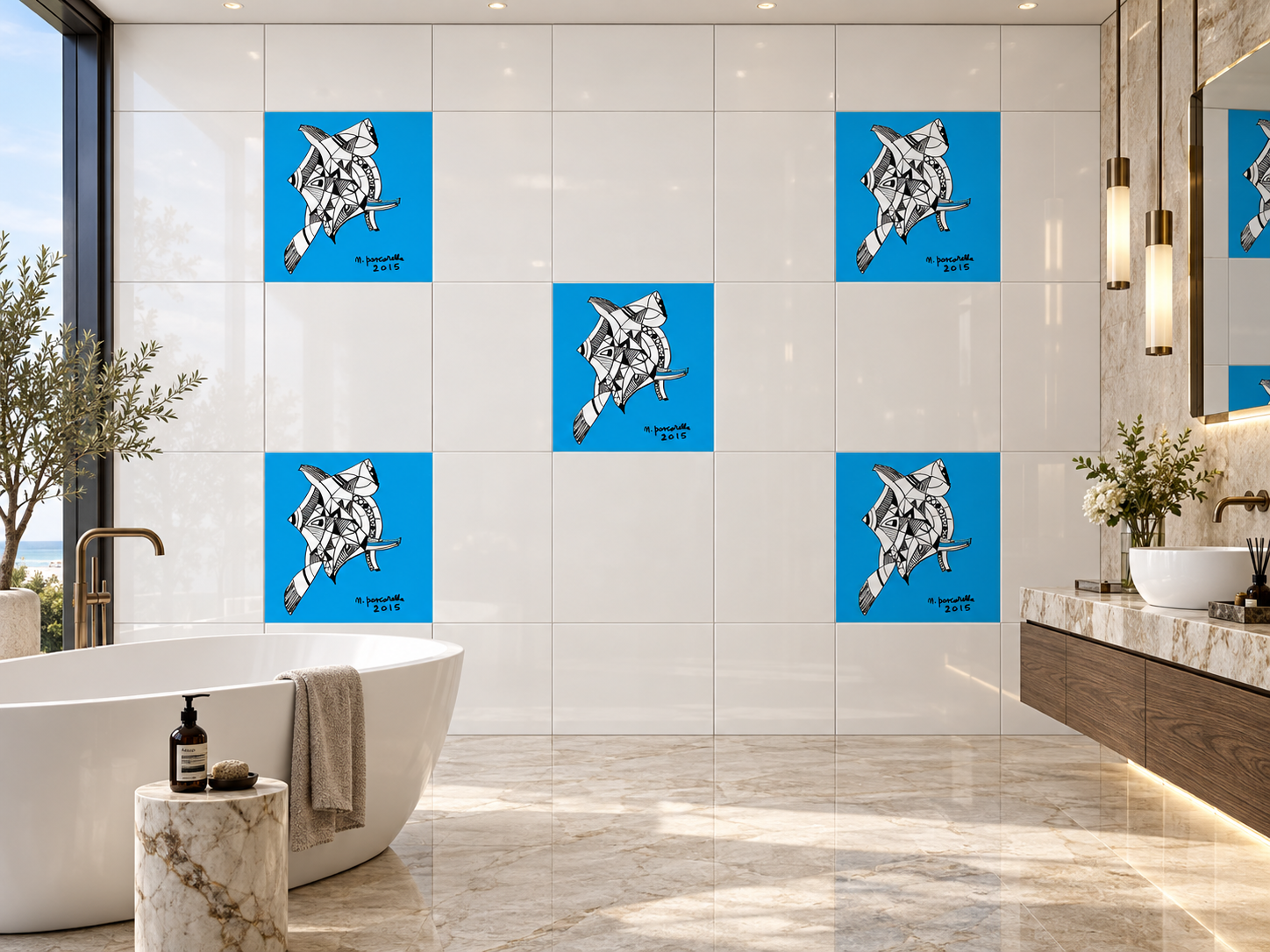
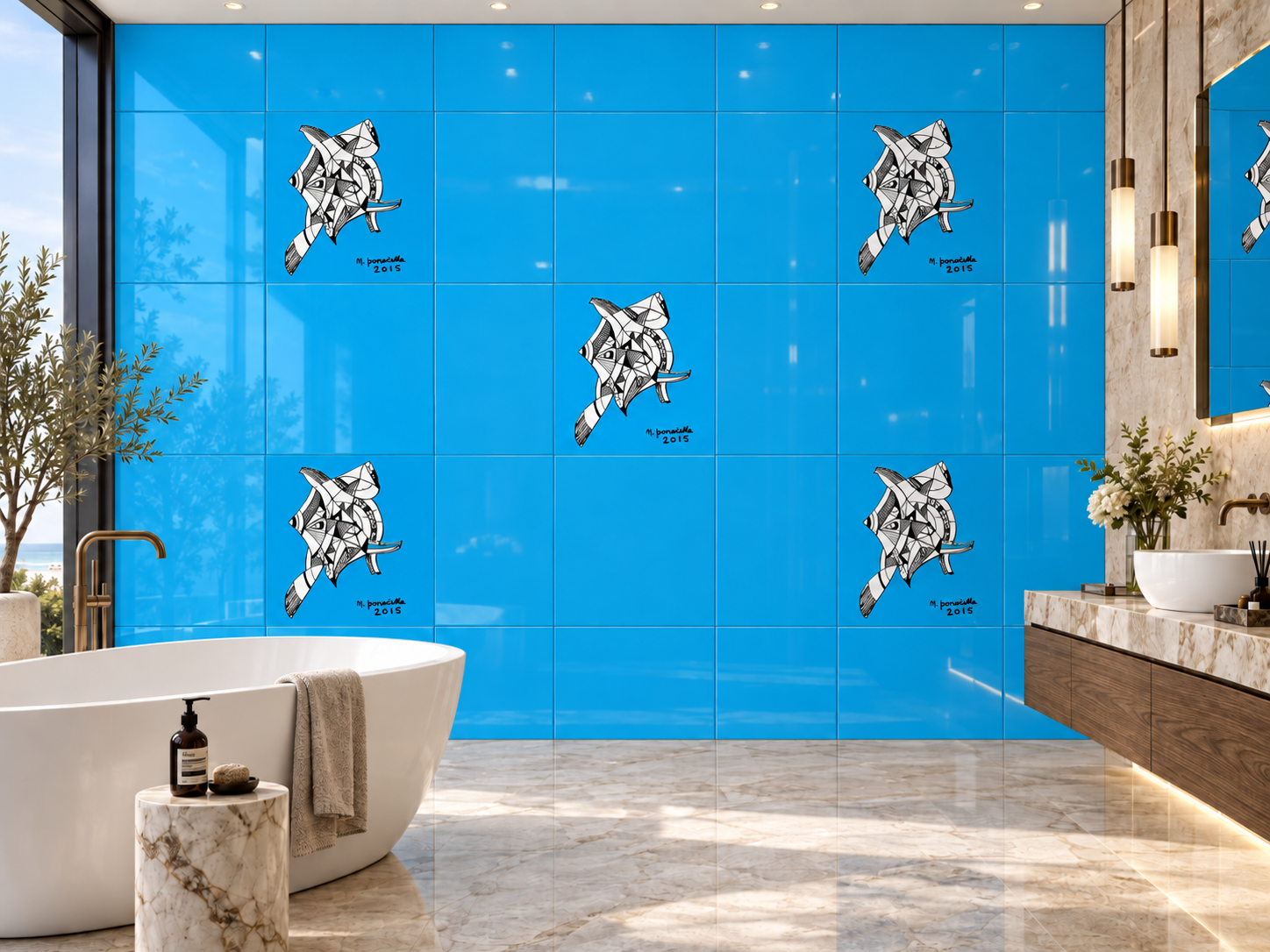
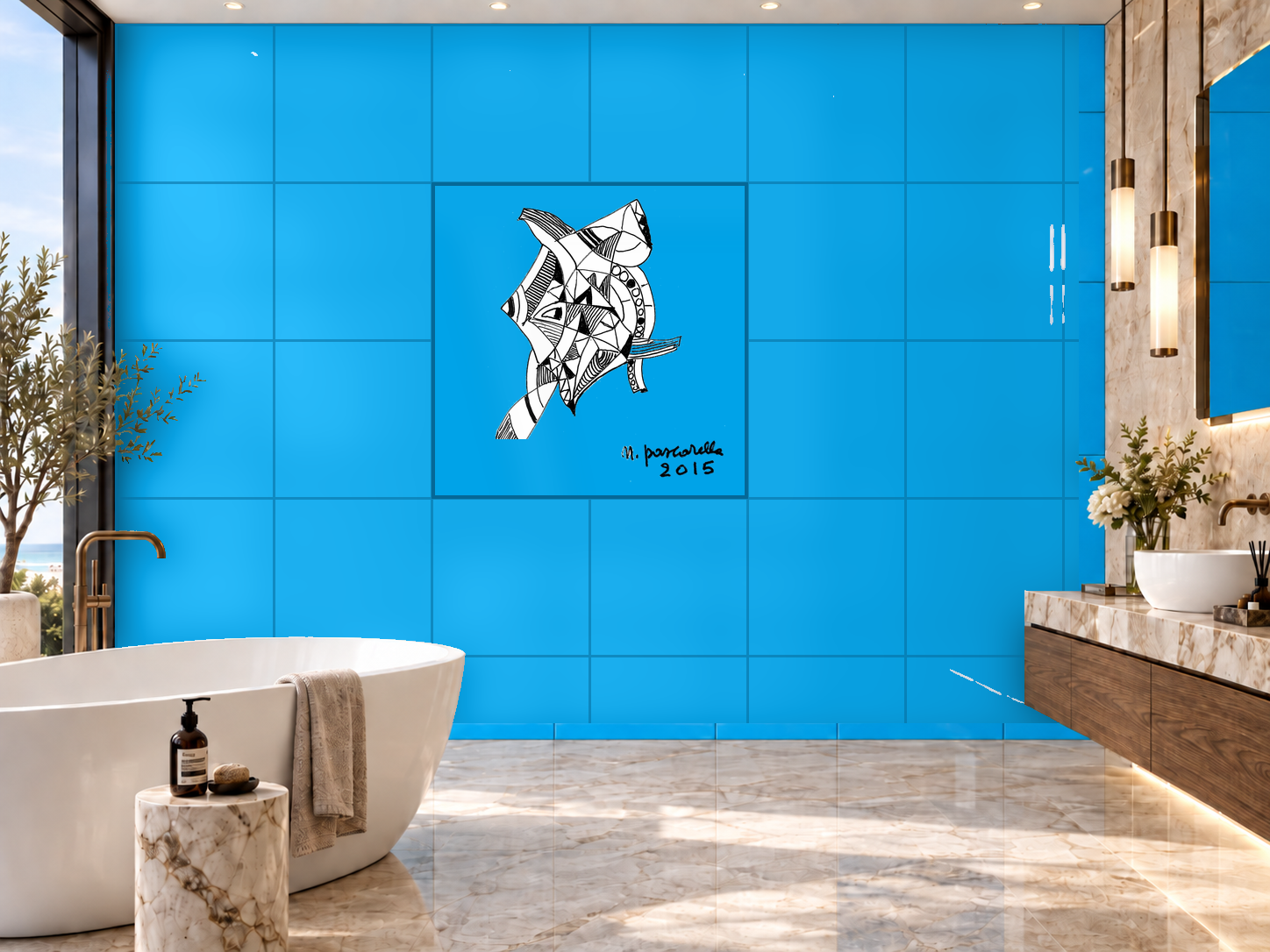
Decorative tiles intended for high-end projects, to be placed individually, at intervals, among plain tiles with the same background shade. The drawing becomes an accent on the architectural surface: the continuity of colour connects the elements, while the mark gives rhythm to the space.
NP Cerebrals wall-covering proposal with inserts on a light background.NP Cerebrals wall-covering proposal on a blue background.NP Cerebrals wall-covering proposal with a central motif.
Numbered posters
Posters produced using laser technology in the standard 70 x 50 cm format, with the option of choosing the 100 x 70 cm format. For each drawing/colour combination, a single edition of no more than ten copies is planned, numbered consecutively from 1 to 10: each copy, whichever size is chosen, takes one of the ten available numbers. A publishing project in which each image retains a distinct identity, traceable to the subject and variant held in the Archive.